


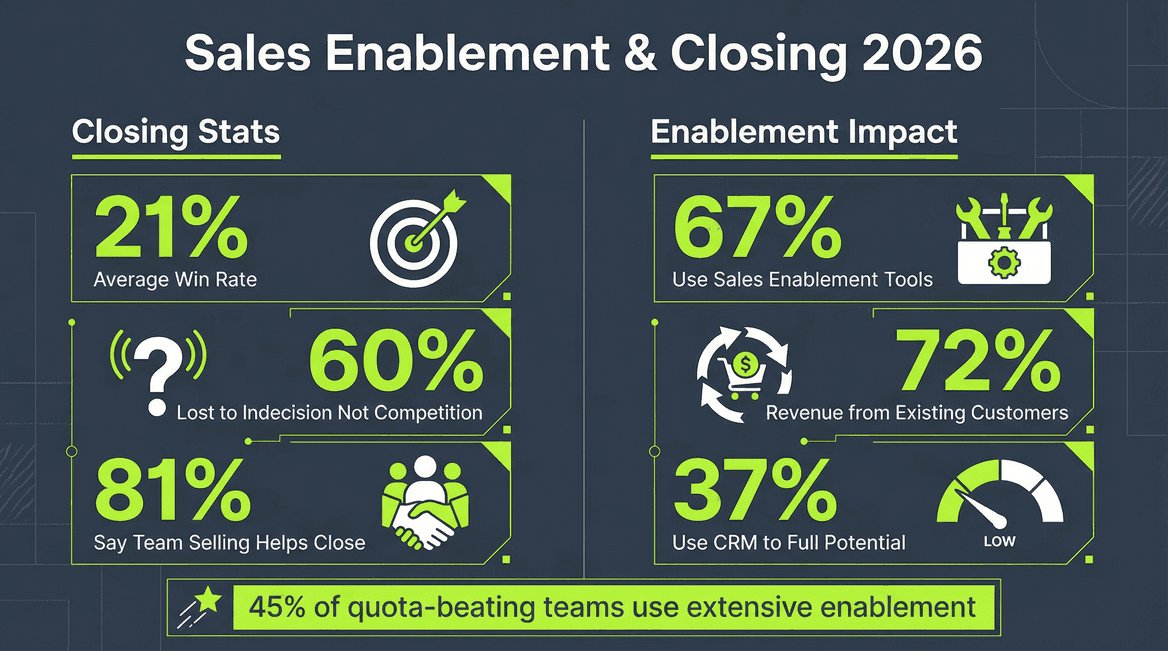
There is no doubt sales enablement has magic made with an alchemy of art and science (see the graphic below). The question is: how does it work best? To appreciate that, let’s start by looking at the history.
Where we’ve come from
It wasn’t that long ago (maybe 10-15 years?) that there were hardly any enablement roles in organisations, but of course, there’s also been an evolution in what this thing actually is. The first generation was what we classically called ‘Sales training’, sitting somewhere between L&D and a Sales Director. We then moved on more to using the word ‘Facilitator’, implying a role that brings together stakeholders in one coherent gathering. But next we started to see more focus around on-the job learning, which the USB-download of training/facilitation sometimes struggled to provide. That led to the dedicated ‘Sales Coach’, whose role was devoted to side-by-side dynamic and scheduled moments coaching.
Meanwhile the ‘Sales Enablement’ role started to flourish and created a sub-type: SE more focussed on tech, project management and systems skills, including managing an LMS and CRM. This later expanded to all-round business enablement and ownership of material creation. Around 2019 as COVID hit, rev-tech (revenue technology) became a key player in the trilogy of people, process and tech. Platforms like Gong and Highspot started to replace legacy methods for assessing rep performance.
The pivotal moment came when AI became an integrated part of their solutions, and as if by magic, sales enablement started to be re-badged as ‘Revenue Enablement’. Around the same time, we saw the rise of the ‘Sales Performance’ role. This became the brilliant all-rounder; someone who would focus more on reporting and data analytics, and provide a business advisory function. So, here we sit in 2026 with a proliferation of SE flavours and variations in functional expertise. Are you still with me? Does it all sound complicated? Well, it isn’t really! Let’s move on to look at the challenges.
The operating challenges
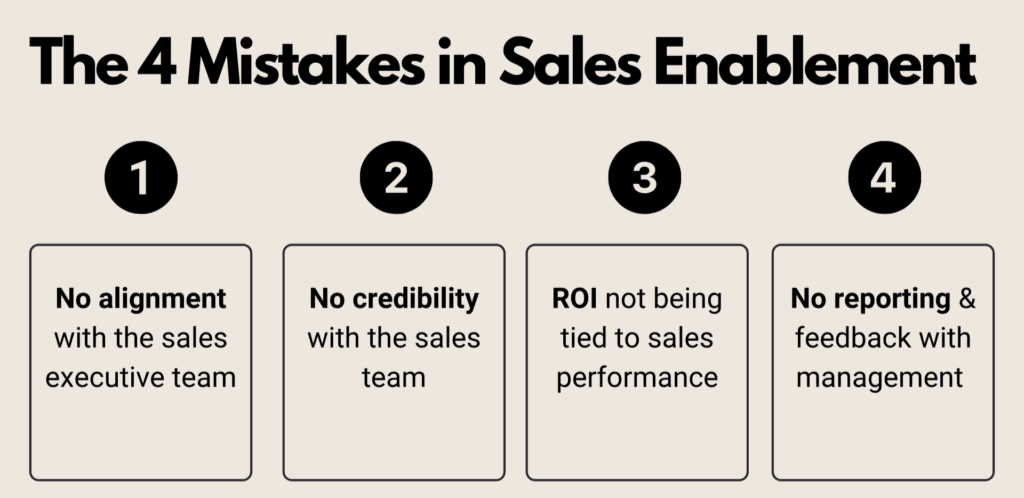
The practical reality of enablement hits home when you look at some key challenges and the graphic below:
- Implementing sales enablement advice: One of the biggest causes of failure is lack of belief in the credibility of the individual, often headlined by a lack of sales experience to lean on. People simply don’t buy in, don’t engage, and the end is nigh. Equally, it also works the other way. One the biggest drivers of high engagement and success in my time at XpertHR, was being able to relate with real-life examples of how to make a concept work well where it matters the most; for the customer.
- Poor quality learning experiences: These tarnish reputation and effectively end further engagement. This could be the materials, design of experience, or overload. The recipe and time are key; reps are busy.
- Ego and collaboration: Sales folk want to have birthdays every day. In simple terms, a reluctance to acknowledge and give credit for success. Something to remember is to run the long race, not the short race.
- Leadership buy in: The number of times I’ve heard leaders vocally articulate irritation with sales enablement is high. However, empathy is important here. There are numbers to hit, forecasts to predict, and KPO’s to make. Having been an SVP of sales, I feel the pain of ‘‘this person is going to suck up my time’’. Again, playing the longer game is key.
- Transparent attribution: The holy grail and Kirkpatrick nirvana. Did it work? Did it move the needle? These must be key measurements, and use the right systems to track deals, but also, speak to your community of reps and managers. Peter Drucker did say you can’t manage what you can’t measure, but not all coaching and training is infinitely measurable. Inability for a rep to execute or even try, is often not taken into consideration. At XpertHR, I regularly gave reps a platform to showcase their skills and wins.
Cooking with the right recipe
Nobody has all the answers, but here are 10+ years of lived experience and outcome we can draw on. This is how I succeeded at XpertHR:
- Understand and link to business strategy: Find a key pillar and ensure you attach to it. Doing enablement as an island will drive perception of low-level importance.
- Find the senior allies: Look for rep allies, and just find allies full stop. Everyone needs a cheerleader; nothing moves without one.
- Build the cross-business collaboration: Most important here is the GTM village. Enablement should and must be embedded in the company GTM planning and delivery, otherwise it’s just noise.
- Make the sales leaders your besties! Nothing can work unless they buy in and support from the front while you lead from the back. Many a great initiative has fallen due to a lack of leader buy in.
- For each objective, get early alignment: Layout what a good result looks like. Clarity removes any potential for later post-mortem blame.
- Test, test, test: Ensure your programmes are resonating early on; don’t wait for ‘the big failure’, and apply the learnings quickly.
- Qualitative evidence: Numbers don’t always give the full picture. Find examples of where the customer engagement has been elevated and use that as your shining light of what is possible.
- Use the right tech stack: Revenue intelligence tools are a must, for coaching, analysing and reporting.
- Use AI to highlight the efficiencies: Possible in the customer engagement process; time savings are the gamechanger.
- Above all, be agile and flex your plan: This will help you remain in sync with the current biggest challenges. Sticking to the plan can become unhelpful if another bigger fire is burning.
As you find your way through your journey, hopefully these points will help you.

Written by Gurinder Singh
I bridge the gap between boardroom ambition and frontline commercial execution. With significant, decorated experience across the Data, Tech, and SaaS sectors – including FTSE 100 environments, I help organisations translate complex growth strategies into predictable, risk-adjusted revenue. As a Master Coach and Sales Enablement Consultant, I provide a “triple-lens” perspective: the high-energy facilitation of a Master Coach, the strategic oversight of a Commercial Director, and the systems-thinking of a Trusted Advisor.